It is a joke to provide advice based on valuation only. We are not valuers! Damn funny place.
--------------------------------------------
Jack Schwager: What kind of analytical approach did you use in evaluating stocks?
Stanley Druckenmiller: When I first started out, I did very thorough papers covering every aspect of a stock or industry. Before I could make the presentation to the stock selection committee, I first had to submit the paper to the research director. I particularly remember the time I gave him my paper on the banking industry. I felt very proud of my work. However, he read through it and said, ‘This is useless. What makes the stock go up and down?’ That comment acted as a spur. Thereafter, I focused my analysis on seeking to identify the factors that were strongly correlated to a stock’s price movement as opposed to looking at all the fundamentals. Frankly, even today, many analysts still don’t know what makes their particular stocks go up and down.
JS: What did you find was the answer?
SD: Very often the key factor is related to earnings. This is particularly true of the bank stocks. Chemical stocks, however, behave quite differently. In this industry, the key factor seems to be capacity. The ideal time to buy the chemical stocks is after a lot of capacity has left the industry and there’s a catalyst that you believe will trigger an increase in demand. Conversely, the ideal time to sell these stocks is when there are lots of announcements for new plants, not when the earnings turn down. The reason for this behavioral pattern is that expansion plans mean that earnings will go down in two to three years, and the stock market tends to anticipate such developments.
Another discipline I learned that helped me determine whether a stock would go up or down is technical analysis. Drelles was very technically oriented, and I was probably more receptive to technical analysis than anyone else in the department. Even though Drelles was the boss, a lot of people thought he was a kook because of all the chart books he kept. However, I found that technical analysis could be very effective.
From: Jack D. Schwager, The New Market Wizards, Harper Business, 1994, p.191.
2010年6月6日 星期日

Jesse Livermore’s Trading Method
first published on 2008.02.07
In his book "How to trade in stocks", Jesse Livermore, a famous speculator in the early 20th century and “the great bear”, discussed his trading method. Though Livermore died broke, we can still benefit from his forty-odd year experience in Wall Street. He emphasized to trade an unstoppable long-term trend and to get in somewhat near the beginning.
“Real movements do not end the day they start. It takes time to complete the end of a genuine movement.” p.29
“It has always been my experience that I never benefited much from a move if I did not get in at somewhere near the beginning of that move. And the reason is that I missed the backlog of profit which is very necessary to provide the courage and patience to sit through a move until the end comes-and to stay through any minor reactions or rallies which were bound to occur from time to time before the movement had completed its course.” p.46
Though Livermore was famous for his tape-reading and was regarded by many people as a technical trader, I think he was virtually a “techno-fundamentalist” as he digested lots of fundamental and market information in his normal trading days. After forming an opinion about the market or a particular stock, it is the TIMING he wanted to discuss in the book. Many of us probably have the experience of getting nothing out of the market though our opinion on the market direction was right. Maybe we get in the trend too late or we are scared out by a vigorous reaction. In the worst case we may have same experience as Jim Rogers’, who in 1970 shorted a stock at 48 and had to cover the position when the stock went up to 72. The stock eventually went up to 96 and then down to 2. Right but lost! Seems familiar? How could Livermore recognize the trend beginning?
“I determined to eliminate all the minor movements.” p.82
“I wanted to find out what constituted the beginning of a Natural Reaction or a Natural Rally. So I began checking the distances of price movements. First I based my calculation on one point. That was no good. Then two points, and so on, until finally I arrived at a point that represented what I thought should constitute the beginning of a Natural Reaction or Natural Rally.” p.83
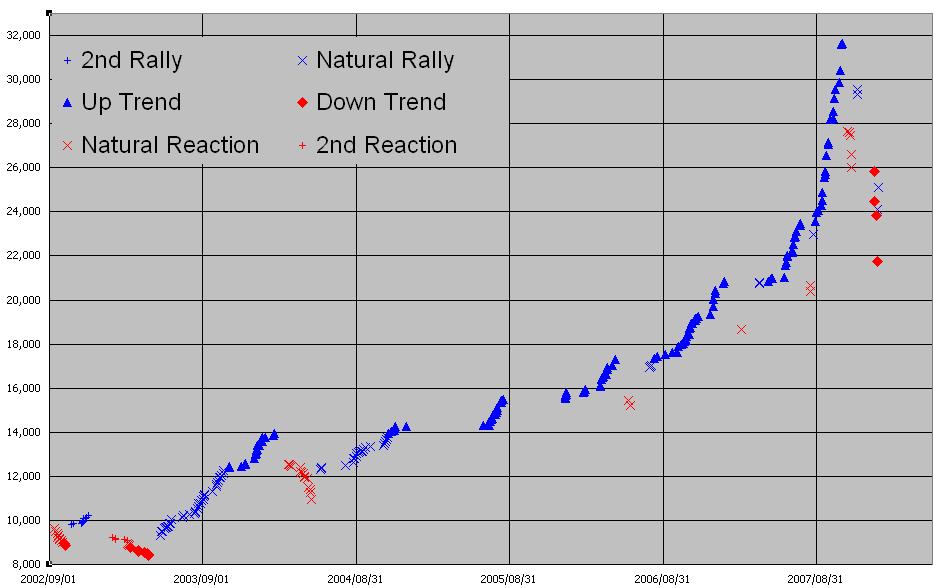
There are around 20 pages in his book detailed his method. Here we only outline his idea and use the following figure as an example:

1. Up Trend: Suppose the stock is rising and we become bearish on the stock owing to some fundamental reason. We should not short at this stage and should wait for a better opportunity to short. At this stage, we only record the closing price in a column named “Up Trend” when it is higher than the last highest closing price.
2. Natural Reaction: How to eliminate minor movements? Livermore use DISTANCE to remove minor movements. If the stock closes significantly lower than the last highest closing price, it is in the Natural Reaction Stage. My definition of “significantly lower” for HSI is 10% of the last highest closing price in the column “Up Trend”. In this stage, we record in a column named “Natural Reaction” only when the closing price is lower than the last lowest closing price.
3. Natural Rally. When the stock closes significantly higher than the last lowest closing price in the column “Natural Reaction”, it is in the Natural Rally Stage. Now we have 2 pivotal points, the highest closing price in “Up Trend” and the lowest closing price in “Natural Reaction”. The price action around pivotal point deserves scrutiny. In this stage, we record in a column named “Natural Rally” only when the closing price is higher than the last highest closing price.
4. Livermore suggested shorting when the test of the highest closing price in “Up Trend” fails. My Definition of test failure for HSI is it closes around 5% lower than the last highest closing price in the column “Natural Rally”.
The above is only a simplified version of his recording method. His recording sheet consists of 6 columns, namely Up Trend, Down Trend, Natural Reaction, Natural Rally, Secondary Reaction and Secondary Rally, and handles many more scenarios, such as test success, fake test success etc. The following is my record of HSI using JL’s method. The minor movements were eliminated as illustrated.

In his book "How to trade in stocks", Jesse Livermore, a famous speculator in the early 20th century and “the great bear”, discussed his trading method. Though Livermore died broke, we can still benefit from his forty-odd year experience in Wall Street. He emphasized to trade an unstoppable long-term trend and to get in somewhat near the beginning.
“Real movements do not end the day they start. It takes time to complete the end of a genuine movement.” p.29
“It has always been my experience that I never benefited much from a move if I did not get in at somewhere near the beginning of that move. And the reason is that I missed the backlog of profit which is very necessary to provide the courage and patience to sit through a move until the end comes-and to stay through any minor reactions or rallies which were bound to occur from time to time before the movement had completed its course.” p.46
Though Livermore was famous for his tape-reading and was regarded by many people as a technical trader, I think he was virtually a “techno-fundamentalist” as he digested lots of fundamental and market information in his normal trading days. After forming an opinion about the market or a particular stock, it is the TIMING he wanted to discuss in the book. Many of us probably have the experience of getting nothing out of the market though our opinion on the market direction was right. Maybe we get in the trend too late or we are scared out by a vigorous reaction. In the worst case we may have same experience as Jim Rogers’, who in 1970 shorted a stock at 48 and had to cover the position when the stock went up to 72. The stock eventually went up to 96 and then down to 2. Right but lost! Seems familiar? How could Livermore recognize the trend beginning?
“I determined to eliminate all the minor movements.” p.82
“I wanted to find out what constituted the beginning of a Natural Reaction or a Natural Rally. So I began checking the distances of price movements. First I based my calculation on one point. That was no good. Then two points, and so on, until finally I arrived at a point that represented what I thought should constitute the beginning of a Natural Reaction or Natural Rally.” p.83
There are around 20 pages in his book detailed his method. Here we only outline his idea and use the following figure as an example:

1. Up Trend: Suppose the stock is rising and we become bearish on the stock owing to some fundamental reason. We should not short at this stage and should wait for a better opportunity to short. At this stage, we only record the closing price in a column named “Up Trend” when it is higher than the last highest closing price.
2. Natural Reaction: How to eliminate minor movements? Livermore use DISTANCE to remove minor movements. If the stock closes significantly lower than the last highest closing price, it is in the Natural Reaction Stage. My definition of “significantly lower” for HSI is 10% of the last highest closing price in the column “Up Trend”. In this stage, we record in a column named “Natural Reaction” only when the closing price is lower than the last lowest closing price.
3. Natural Rally. When the stock closes significantly higher than the last lowest closing price in the column “Natural Reaction”, it is in the Natural Rally Stage. Now we have 2 pivotal points, the highest closing price in “Up Trend” and the lowest closing price in “Natural Reaction”. The price action around pivotal point deserves scrutiny. In this stage, we record in a column named “Natural Rally” only when the closing price is higher than the last highest closing price.
4. Livermore suggested shorting when the test of the highest closing price in “Up Trend” fails. My Definition of test failure for HSI is it closes around 5% lower than the last highest closing price in the column “Natural Rally”.
The above is only a simplified version of his recording method. His recording sheet consists of 6 columns, namely Up Trend, Down Trend, Natural Reaction, Natural Rally, Secondary Reaction and Secondary Rally, and handles many more scenarios, such as test success, fake test success etc. The following is my record of HSI using JL’s method. The minor movements were eliminated as illustrated.


2010年5月23日 星期日
期望 by 葉青霖﹝轉載﹞
引用自:http://hk.myblog.yahoo.com/alain-yip/article?mid=10135
數年前在 Capital CEO 雜誌寫了一個專欄,內容是把我在世界各地旅遊的經驗和心情,藉著照片和讀者分享。當時編輯問過我一個問題:「在你到過的所有地方之中,你最喜歡那一處?」
後來替無線電視翡翠台拍攝旅遊特輯「江山如畫」,節目播出後,也有不少人問我:「在你拍過的地方之中,你覺得那一處風景最美?」
我的答案同樣都是:「任何一個地方都有它獨特和值得欣賞之處,只視乎你當時的心情如何而已。那麼怎樣才能有好的心情呢?你必須要放開懷抱,不管任何天氣和遇到甚麼情況,都要懂得去欣賞。」
記得有一次,我的大女兒有點不開心地告訴我:「今天學校派成績表,我得到一個 C 和兩個 B。」當時我的第一個反應,就是她一向的成績都很好,這次不知道出了甚麼問題,使她只能得到兩 B 一 C 呢?正想安慰她求學不是求分數時,順便問一問:「那麼你其他成績又如何呢?」誰料她答道:「都是 A 囉!」真的令我哭笑不得呢!
當時我就是對她的成績有先入為主的想法,便以為她的不開心是因為成績很差;誰料她只是對自己要求高而已。
其實我和太太對於兩個女兒的期望都有共識,就是希望她們能夠成長為一個好人。至於是否聰明、讀書成績怎樣、將來有甚麼成就等等,都不是大問題。
我也曾經被邀在一些講座中分享「夫妻相處之道」,我提醒大家一定要學習「期望管理」。例如你約了朋友外出,太太問你甚麼時候回家?假如你打算晚上十時的話,最好說十一時。因為如果有任何突發事情,令你十時半才回到家,假如你說了十時,太太可能會怪你為甚麼遲了?相反假如你說十一時,太太就會高興地覺得你早了。
我現在處理每一件事,不論大小,都只是重視過程,對結果不會太計較。其實只要對任何事都不要有太多期望,盡管用平常心去面對,自然就會減少失望的機會了。
數年前在 Capital CEO 雜誌寫了一個專欄,內容是把我在世界各地旅遊的經驗和心情,藉著照片和讀者分享。當時編輯問過我一個問題:「在你到過的所有地方之中,你最喜歡那一處?」
後來替無線電視翡翠台拍攝旅遊特輯「江山如畫」,節目播出後,也有不少人問我:「在你拍過的地方之中,你覺得那一處風景最美?」
我的答案同樣都是:「任何一個地方都有它獨特和值得欣賞之處,只視乎你當時的心情如何而已。那麼怎樣才能有好的心情呢?你必須要放開懷抱,不管任何天氣和遇到甚麼情況,都要懂得去欣賞。」
記得有一次,我的大女兒有點不開心地告訴我:「今天學校派成績表,我得到一個 C 和兩個 B。」當時我的第一個反應,就是她一向的成績都很好,這次不知道出了甚麼問題,使她只能得到兩 B 一 C 呢?正想安慰她求學不是求分數時,順便問一問:「那麼你其他成績又如何呢?」誰料她答道:「都是 A 囉!」真的令我哭笑不得呢!
當時我就是對她的成績有先入為主的想法,便以為她的不開心是因為成績很差;誰料她只是對自己要求高而已。
其實我和太太對於兩個女兒的期望都有共識,就是希望她們能夠成長為一個好人。至於是否聰明、讀書成績怎樣、將來有甚麼成就等等,都不是大問題。
我也曾經被邀在一些講座中分享「夫妻相處之道」,我提醒大家一定要學習「期望管理」。例如你約了朋友外出,太太問你甚麼時候回家?假如你打算晚上十時的話,最好說十一時。因為如果有任何突發事情,令你十時半才回到家,假如你說了十時,太太可能會怪你為甚麼遲了?相反假如你說十一時,太太就會高興地覺得你早了。
我現在處理每一件事,不論大小,都只是重視過程,對結果不會太計較。其實只要對任何事都不要有太多期望,盡管用平常心去面對,自然就會減少失望的機會了。
2010年5月22日 星期六
做股票經紀的發展路線﹝轉載﹞
引用自:http://forum2.hkgolden.com/view.aspx?type=FN&message=2254553
天空之藍2:
早醒, 寫一寫做股票的路線
通常分開三條路線
是我見到經紀三條發展路線
股票經紀乃夕陽行業..多次強調, 到現在我都相信仍是
入行通常好睇個人
三類人較多
第一類剛畢業的大學生, 冇工做, 殺入經紀行, 想做金融的, 通常都係失敗居多
第二類, 在金融風暴被炒的人, 被炒的人
通常也有本身有少少身家, 通常都會入到行, 可以做得較長
anyway, 仲要睇市況, 08年的市況, 新入行經紀都係凶多吉少
------------------------------------
天空之藍2:
第一條發展路線- 做經紀行的負責人員(RO)
即係負責監察公司運作, 唔俾公司違規
如果公司出事, 要負責的
好處是有老底, 通常2萬-4萬蚊,
要睇資歷, 年紀, 學歷
大學畢業, 入行經驗少都可以上牌
如果冇大學畢業, 年資要較長
------------------------------------
天空之藍2:
負責人員見證監會最多的情況, 是做交收做得不好
如客人買貨, 5萬戶口, 替佢買了50萬貨
在t+2 日或前, 客人沒有入番45萬
而一路拖, 而公司沒有追客人入錢
另一方面, 隻股票跌多過10%, 戶口已經負數
仲幫客人買貨
------------------------------------
天空之藍2:
負責人員, 是出老底, 老底來自公司..
一方面又要監察公司....
老細話可以, 但條例唔可以..點攪?
好似一個case, 老板將自己戶口的錢, 轉去另一個公司一名客人的錢
你是RO, 明知唔得, 但你批唔批? 老細要你簽名批....
利益衝突?
但其實出事機會不高, 要睇邊間行, 專做炒家的細行容易出事
出左事, 好多公司內部解決就算, 好似客人欠錢, 公司自己吞左條數....
即使出事前, 你做好準備, 應付證監會就可以
做足功課
收老底, 是預左出事時, 老板叫你去應付證監會
------------------------------------
利物浦街:
RO同經記都唔係果條路, 經記係自顧人士, 間行係經記的partner, RO就一定係'打工'的
理倫上RO係dealer/sales trader上的 (as far as I know)
------------------------------------
天空之藍2:
第二類, 是專做客人的經紀
一路發展, 不斷搵客
搵到客人後
就有條件同公司傾COMMISSION點分, 傾唔店多數離開 , 大把行請
一個經紀, 一個月做到3,4千萬成交額, 公司會開始重視
一個月做到1.5-2億, 已可以說是步向大經紀之路
如果做到1.5-2億, 間間行都會肯同你傾
做到此類經紀, 公司有機會派你駐守分行街鋪做MANAGER
分行的經紀COMMISSION, 你有份分
------------------------------------
天空之藍2:
畢業生搵工難...最後變左帶錢番工
又唔識炒, 輸幾獲, 就"起身"
------------------------------------
天空之藍2:
RO最多的一位(只以證券一個牌計)
老底我見過最高是6萬蚊一個月
但6萬蚊是, 是有時幫手上電視, 仲有要攪下TALK
但極少數, 多數2-4萬, 做左十幾年的 ,大概3萬5-4萬
------------------------------------
天空之藍2:
2,3月, 都唔容易做成交
2月跌市, 2月跌市, 散戶不敢入市
3月升市, 下下跳GAP開, 又唔敢追貨
一追貨, 又升市不升股...
結果.....
------------------------------------
天空之藍2:
開條TEAM, 股票經紀TEAM
阿頭發個豬頭, 下屬炒, 佢有得份
但經紀工作很個人, 不需阿頭幫
所以好容易流失好的下屬
自己做到數, 為何要俾上面拆你COMMISSION?
直頭用公司傾, 跳過上司, 又或轉行
魚唔過塘唔肥
------------------------------------
御用閒人:
你地究竟知唔知想做乜嫁 做股票經紀得一個條件-有客.有生意公司話之你唔返.所以係睇你搵唔揾到客,唔係睇係學歷
------------------------------------
蓋世寶吊老母:
去輝x見工 第一句問:你孭到幾多turnover
------------------------------------
御用閒人:
不過唔好一畢業就入行,一來太後生冇客信你.焗住自已炒冇經驗好快起身
------------------------------------
名太長:
唉~~~~~~真係好無聊既一份工
本人而家係經紀
除左要sales的技巧同人脈外,根本就唔會學到d乜野~~~~~~
而呢個亦都係最慘,根本就係唔pro的職業
------------------------------------
法官大人:
RO你要做, 都唔容易
一來要考試, 考完試後
有公司幫你上牌, 做負責人員
負責人員的競爭都好大, 好多人都想做, 因為有老底算不錯
有些公司, 准許負責人員幫客人買賣股票, (多一份收入)
有些則不准, 要睇執行得嚴唔嚴
人工係高
不過安家費黎姐
講堅, 有咩事公司第一時間推你出去頂
有事釘你幾個月至幾年license
話就話幾個月至幾年, 但完左你apply 番都好難
要轉行
------------------------------------
膠龍皇帝:
I really don't recommend people to become an RO, ESPECIALLY in Smaller Firms..........ultra hyper easy to PK and then you = game over in financial field. Doesn't worth the 30-40K....
------------------------------------
御用閒人:
宜家好多野都刑事,有乜行差踏錯受兩碌就仆街la
------------------------------------
-^MAX^-:
RO真係唔係咁好做, 成間公司你揹晒
有profit 就老闆袋
有鑊你揹晒
香港個市太細又大兢爭, 做金融經紀sales唔靠少少手段好難做
幾咁小心都可能比手下經紀搞到出事
------------------------------------
鳥鳴山更幽:
現時香港證券行最大嘅對手係銀行,
而銀行嘅最大優勢係"資金安全",
好在而家所有銀行嘅服務都廢, 如果四大銀行是但一間突然醒目,
請我來負責大力發展證券交易這一暴利業務, 再引發其它銀行跟風,
證券行生存空間係短時間內縮小至現時嘅 1/3.
------------------------------------
御用閒人:
我做過半年forex(有考牌)已經頂唔順
點解話股票係夕陽行業? 唔係睇成交量咩, 香港應該只係輸sgp少少, 因為外國佬已經唔洗經香港買大陸股?
係股票經紀係夕陽行業,d佣金越來越低,又免佣又一舊任做.宜家係公司搶sales d客
------------------------------------
天空之藍2:
早醒, 寫一寫做股票的路線
通常分開三條路線
是我見到經紀三條發展路線
股票經紀乃夕陽行業..多次強調, 到現在我都相信仍是
入行通常好睇個人
三類人較多
第一類剛畢業的大學生, 冇工做, 殺入經紀行, 想做金融的, 通常都係失敗居多
第二類, 在金融風暴被炒的人, 被炒的人
通常也有本身有少少身家, 通常都會入到行, 可以做得較長
anyway, 仲要睇市況, 08年的市況, 新入行經紀都係凶多吉少
------------------------------------
天空之藍2:
第一條發展路線- 做經紀行的負責人員(RO)
即係負責監察公司運作, 唔俾公司違規
如果公司出事, 要負責的
好處是有老底, 通常2萬-4萬蚊,
要睇資歷, 年紀, 學歷
大學畢業, 入行經驗少都可以上牌
如果冇大學畢業, 年資要較長
------------------------------------
天空之藍2:
負責人員見證監會最多的情況, 是做交收做得不好
如客人買貨, 5萬戶口, 替佢買了50萬貨
在t+2 日或前, 客人沒有入番45萬
而一路拖, 而公司沒有追客人入錢
另一方面, 隻股票跌多過10%, 戶口已經負數
仲幫客人買貨
------------------------------------
天空之藍2:
負責人員, 是出老底, 老底來自公司..
一方面又要監察公司....
老細話可以, 但條例唔可以..點攪?
好似一個case, 老板將自己戶口的錢, 轉去另一個公司一名客人的錢
你是RO, 明知唔得, 但你批唔批? 老細要你簽名批....
利益衝突?
但其實出事機會不高, 要睇邊間行, 專做炒家的細行容易出事
出左事, 好多公司內部解決就算, 好似客人欠錢, 公司自己吞左條數....
即使出事前, 你做好準備, 應付證監會就可以
做足功課
收老底, 是預左出事時, 老板叫你去應付證監會
------------------------------------
利物浦街:
RO同經記都唔係果條路, 經記係自顧人士, 間行係經記的partner, RO就一定係'打工'的
理倫上RO係dealer/sales trader上的 (as far as I know)
------------------------------------
天空之藍2:
第二類, 是專做客人的經紀
一路發展, 不斷搵客
搵到客人後
就有條件同公司傾COMMISSION點分, 傾唔店多數離開 , 大把行請
一個經紀, 一個月做到3,4千萬成交額, 公司會開始重視
一個月做到1.5-2億, 已可以說是步向大經紀之路
如果做到1.5-2億, 間間行都會肯同你傾
做到此類經紀, 公司有機會派你駐守分行街鋪做MANAGER
分行的經紀COMMISSION, 你有份分
------------------------------------
天空之藍2:
畢業生搵工難...最後變左帶錢番工
又唔識炒, 輸幾獲, 就"起身"
------------------------------------
天空之藍2:
RO最多的一位(只以證券一個牌計)
老底我見過最高是6萬蚊一個月
但6萬蚊是, 是有時幫手上電視, 仲有要攪下TALK
但極少數, 多數2-4萬, 做左十幾年的 ,大概3萬5-4萬
------------------------------------
天空之藍2:
2,3月, 都唔容易做成交
2月跌市, 2月跌市, 散戶不敢入市
3月升市, 下下跳GAP開, 又唔敢追貨
一追貨, 又升市不升股...
結果.....
------------------------------------
天空之藍2:
開條TEAM, 股票經紀TEAM
阿頭發個豬頭, 下屬炒, 佢有得份
但經紀工作很個人, 不需阿頭幫
所以好容易流失好的下屬
自己做到數, 為何要俾上面拆你COMMISSION?
直頭用公司傾, 跳過上司, 又或轉行
魚唔過塘唔肥
------------------------------------
御用閒人:
你地究竟知唔知想做乜嫁 做股票經紀得一個條件-有客.有生意公司話之你唔返.所以係睇你搵唔揾到客,唔係睇係學歷
------------------------------------
蓋世寶吊老母:
去輝x見工 第一句問:你孭到幾多turnover
------------------------------------
御用閒人:
不過唔好一畢業就入行,一來太後生冇客信你.焗住自已炒冇經驗好快起身
------------------------------------
名太長:
唉~~~~~~真係好無聊既一份工
本人而家係經紀
除左要sales的技巧同人脈外,根本就唔會學到d乜野~~~~~~
而呢個亦都係最慘,根本就係唔pro的職業
------------------------------------
法官大人:
RO你要做, 都唔容易
一來要考試, 考完試後
有公司幫你上牌, 做負責人員
負責人員的競爭都好大, 好多人都想做, 因為有老底算不錯
有些公司, 准許負責人員幫客人買賣股票, (多一份收入)
有些則不准, 要睇執行得嚴唔嚴
人工係高
不過安家費黎姐
講堅, 有咩事公司第一時間推你出去頂
有事釘你幾個月至幾年license
話就話幾個月至幾年, 但完左你apply 番都好難
要轉行
------------------------------------
膠龍皇帝:
I really don't recommend people to become an RO, ESPECIALLY in Smaller Firms..........ultra hyper easy to PK and then you = game over in financial field. Doesn't worth the 30-40K....
------------------------------------
御用閒人:
宜家好多野都刑事,有乜行差踏錯受兩碌就仆街la
------------------------------------
-^MAX^-:
RO真係唔係咁好做, 成間公司你揹晒
有profit 就老闆袋
有鑊你揹晒
香港個市太細又大兢爭, 做金融經紀sales唔靠少少手段好難做
幾咁小心都可能比手下經紀搞到出事
------------------------------------
鳥鳴山更幽:
現時香港證券行最大嘅對手係銀行,
而銀行嘅最大優勢係"資金安全",
好在而家所有銀行嘅服務都廢, 如果四大銀行是但一間突然醒目,
請我來負責大力發展證券交易這一暴利業務, 再引發其它銀行跟風,
證券行生存空間係短時間內縮小至現時嘅 1/3.
------------------------------------
御用閒人:
我做過半年forex(有考牌)已經頂唔順
點解話股票係夕陽行業? 唔係睇成交量咩, 香港應該只係輸sgp少少, 因為外國佬已經唔洗經香港買大陸股?
係股票經紀係夕陽行業,d佣金越來越低,又免佣又一舊任做.宜家係公司搶sales d客
------------------------------------
2010年5月9日 星期日
『贏』這個字 by HANA﹝轉載﹞
引用自:http://hana-ox.blogspot.com/2010/05/blog-post_08.html
『贏』字可拆成『亡』/『口』/『月』/『貝』/『凡』五個字,將這五個字引申為五個贏家所需具備的態度。這個講法滿有意思的,這篇文'遠古'時代看過,已經找不到出處了,現將此文添油加醋略加修改後轉貼與您分享,也請您細心體會!
第一個字「亡」
亡代表要有危機意識,我們必須要隨時了解我們所處的環境變化,過去成功的經驗往往是未來失敗最大的主因,安逸的日子過久了,我們會越來越喪失鬥志,有一個敵人或競爭者的好處是,它至少不會讓你懈怠。
亡也可以表示「無」的意思,要學習讓自己歸零,對很多人、事、物不要有主觀的成見,能多方了解彼此的需求。亡也可以很單純是死亡或結束之意,雖是結束,但生命的週期是無限開展的,它更象徵了機會與無限的生命力。
第二個字是「口」
口代表溝通,必須把你的想法告訴所屬 ,要在不同的場合中宣示要達成的目標與決心。這是個唔係人人都知的道理。
成功的溝通是雙向的,除了有良好的言語表達能力之外,也要有傾聽的能力。聽得清楚,有助於了解彼此的需求,更有助於自己陳述論點。
第三個字是「月」
月指的是時間,任何贏都需要時間的積累,需要在歲月上下功夫,泡沫式的英雄作風最後總如曇花一現般地消失無蹤。
第四個字是「貝」
中國最早以貝為交易的貨幣,因此貝可以簡單地說是錢,然而有錢就一定會贏嗎?這倒也未必,有的人雖然沒有錢,但是他有技術,有智慧、商標專利、豐沛的人際關係、國際性公司的經營管理經驗……等,這些都是無形的資產。
因此「貝」就廣義而言,應是籌碼,是可以為自己加分的要素,它可能就是一個人的獨特性 ,僻如有一技傍身 ,而要如何增加自己的籌碼呢?在知識經濟的時代裡,隨時增加自己的知識,保持學習的態度,就是最好的扎根方法。
第五個字是「凡」
顧名思義,凡指的是平常心,我們努力去爭取勝利,但是最後的成績,往往不一定盡如人意。凡人嘛!時刻保持還好 的心境足矣。
『贏』字可拆成『亡』/『口』/『月』/『貝』/『凡』五個字,將這五個字引申為五個贏家所需具備的態度。這個講法滿有意思的,這篇文'遠古'時代看過,已經找不到出處了,現將此文添油加醋略加修改後轉貼與您分享,也請您細心體會!
第一個字「亡」
亡代表要有危機意識,我們必須要隨時了解我們所處的環境變化,過去成功的經驗往往是未來失敗最大的主因,安逸的日子過久了,我們會越來越喪失鬥志,有一個敵人或競爭者的好處是,它至少不會讓你懈怠。
亡也可以表示「無」的意思,要學習讓自己歸零,對很多人、事、物不要有主觀的成見,能多方了解彼此的需求。亡也可以很單純是死亡或結束之意,雖是結束,但生命的週期是無限開展的,它更象徵了機會與無限的生命力。
第二個字是「口」
口代表溝通,必須把你的想法告訴所屬 ,要在不同的場合中宣示要達成的目標與決心。這是個唔係人人都知的道理。
成功的溝通是雙向的,除了有良好的言語表達能力之外,也要有傾聽的能力。聽得清楚,有助於了解彼此的需求,更有助於自己陳述論點。
第三個字是「月」
月指的是時間,任何贏都需要時間的積累,需要在歲月上下功夫,泡沫式的英雄作風最後總如曇花一現般地消失無蹤。
第四個字是「貝」
中國最早以貝為交易的貨幣,因此貝可以簡單地說是錢,然而有錢就一定會贏嗎?這倒也未必,有的人雖然沒有錢,但是他有技術,有智慧、商標專利、豐沛的人際關係、國際性公司的經營管理經驗……等,這些都是無形的資產。
因此「貝」就廣義而言,應是籌碼,是可以為自己加分的要素,它可能就是一個人的獨特性 ,僻如有一技傍身 ,而要如何增加自己的籌碼呢?在知識經濟的時代裡,隨時增加自己的知識,保持學習的態度,就是最好的扎根方法。
第五個字是「凡」
顧名思義,凡指的是平常心,我們努力去爭取勝利,但是最後的成績,往往不一定盡如人意。凡人嘛!時刻保持還好 的心境足矣。
訂閱:
文章 (Atom)


